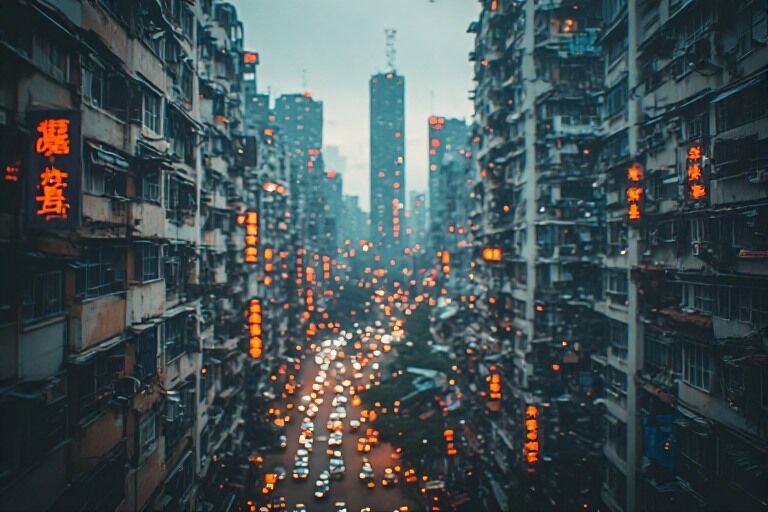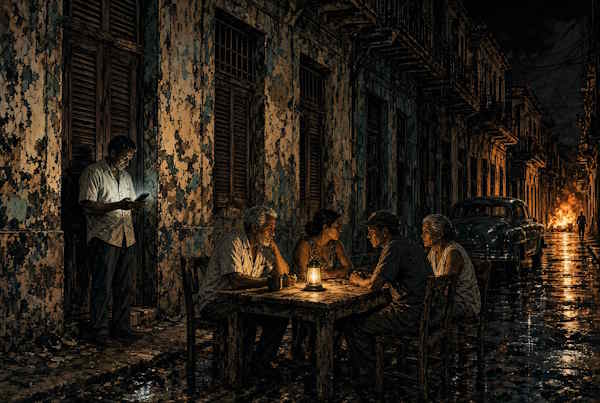
The city of lights has become a city of shadows. At night you drive through Vedado or Centro Habana and see only scattered yellow dots of flashlights, the flickering screens of power banks, and the headlights of Chinese electric scooters. Hotels along the Malecón stay lit because they have generators. The apartment blocks behind them do not.
Since January, when Washington cut off Venezuelan oil shipments after the capture of Nicolás Maduro in Caracas and imposed a de facto embargo on fuel imports, Cuba has lived in a permanent energy crisis. The national grid has collapsed completely several times — most recently on September 18. Millions of people go without electricity for hours or days. Water pumps stop. Refrigerators become cabinets. Hospitals are prioritized; everyone else improvises.
This is the daily life a U.S. reporter sees on the ground: not abstract geopolitics, but heat, mosquitoes, empty shelves, and the constant question of when the lights will come back on.
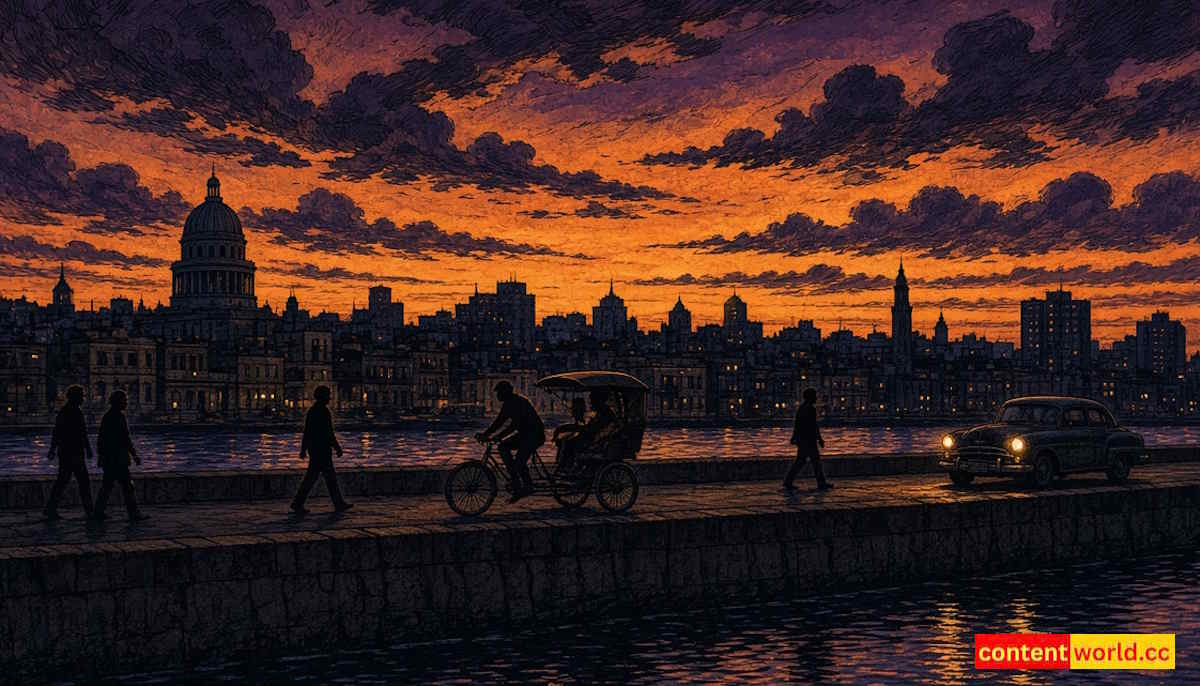 Havana without lights – skyline and Malecón at dusk, the city almost dark.
The Economy of Exhaustion
The Cuban economy was already dilapidated before 2026. Since 2019 it has contracted by more than ten percent. Inflation, currency reforms, and the decades-old embargo have destroyed the purchasing power of state salaries. What has been added now is the energy blockade. Venezuela previously supplied the lion’s share of imported oil. Mexico also pulled back. Only occasionally did a Russian tanker still reach the island.
The consequences are visible: transport stalls, production collapses, food distribution becomes a lottery. The peso has fallen further. Many everyday goods are available only for hard currency or on the black market. At the same time, an estimated 1.6 to more than 2 million people have left the country since 2020 — a quarter of the population by some estimates. Those who stayed are often older, poorer, or locked into the apparatus. The demographic clock is running against the regime.
In June, President Miguel Díaz-Canel announced the largest reform package in decades: 176 measures. Private companies may grow larger, foreigners may invest in real estate, banks, and gas stations, and the state is supposed to withdraw from parts of the economy. The models are China and Vietnam. Díaz-Canel insists this is not a farewell to socialism, but its rescue.
On the street it feels remote. Those with money buy solar panels or lithium batteries. Those without cook with charcoal and sleep on the roof. The reforms are meant to attract investors. Whether they will do so under secondary sanctions and with a power grid that keeps collapsing remains an open question. Washington has already dismissed them as insufficient.
Washington’s Maximum Pressure
The second Trump administration no longer treats Cuba as a tiresome relic, but as a security problem in the Western Hemisphere. After Venezuela came the escalation: an oil blockade, sanctions on Díaz-Canel, his family, parts of the Castro family, the military conglomerate GAESA, nickel companies, and other state firms. Former President Raúl Castro was indicted in the United States in connection with the 1996 shoot-down of small aircraft.
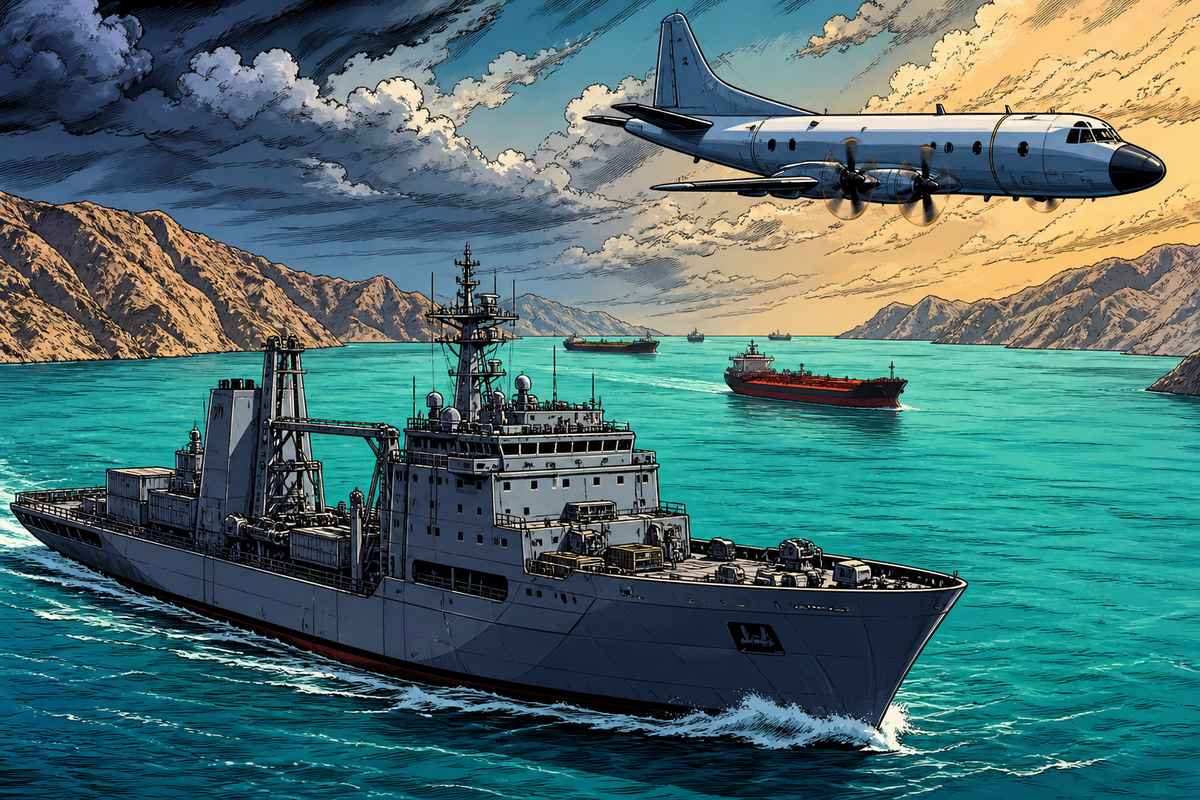
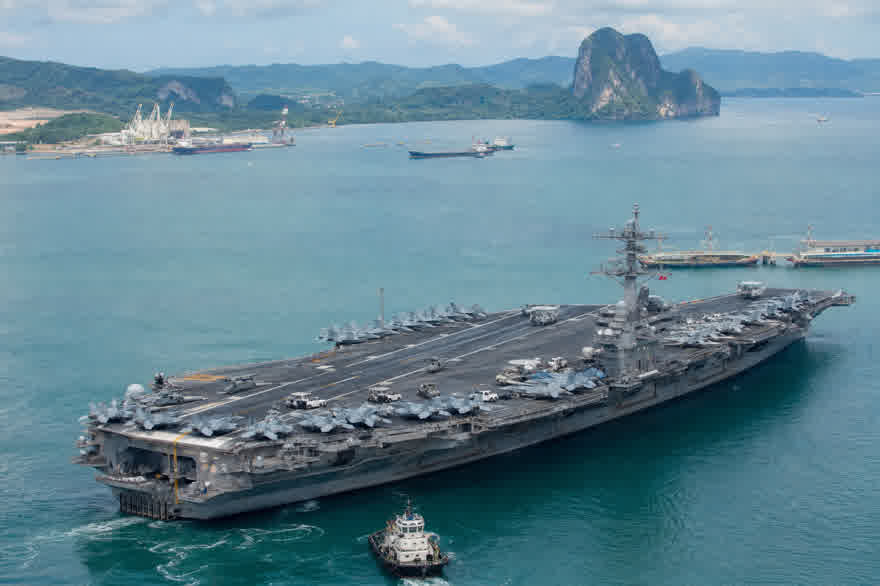
Secretary of State Marco Rubio and Defense Secretary Pete Hegseth have left “all options” on the table. There have been reports of increased reconnaissance flights, a dedicated task force, and the deployment of the aircraft carrier USS Nimitz to the Caribbean. Yesterday at the U.N. General Assembly, Trump himself called Cuba a “failed state” and said freedom was coming. The Cuban delegation walked out of the hall.
From Havana’s point of view, this is a continuation of a 67-year siege, now with the explicit goal of regime change. Havana speaks of a “genocidal energy embargo” and unconventional warfare. There are currently no negotiations. Earlier back-channel talks are said to have collapsed over Florida hard-liners and Havana’s refusal to sacrifice Díaz-Canel.
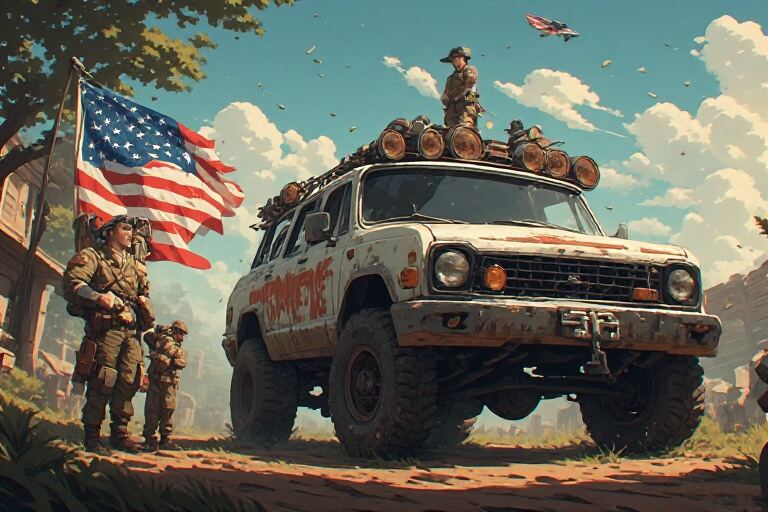
The Monroe Doctrine is back, this time with a military undertone. After the lightning operation in Caracas, many here ask whether Cuba is “next.” The regime has planned for decades for a “war of all the people”: conventional defeat, then guerrilla resistance. Arms caches and structures exist. An invasion would not be a walkover — and would ruin the island further.
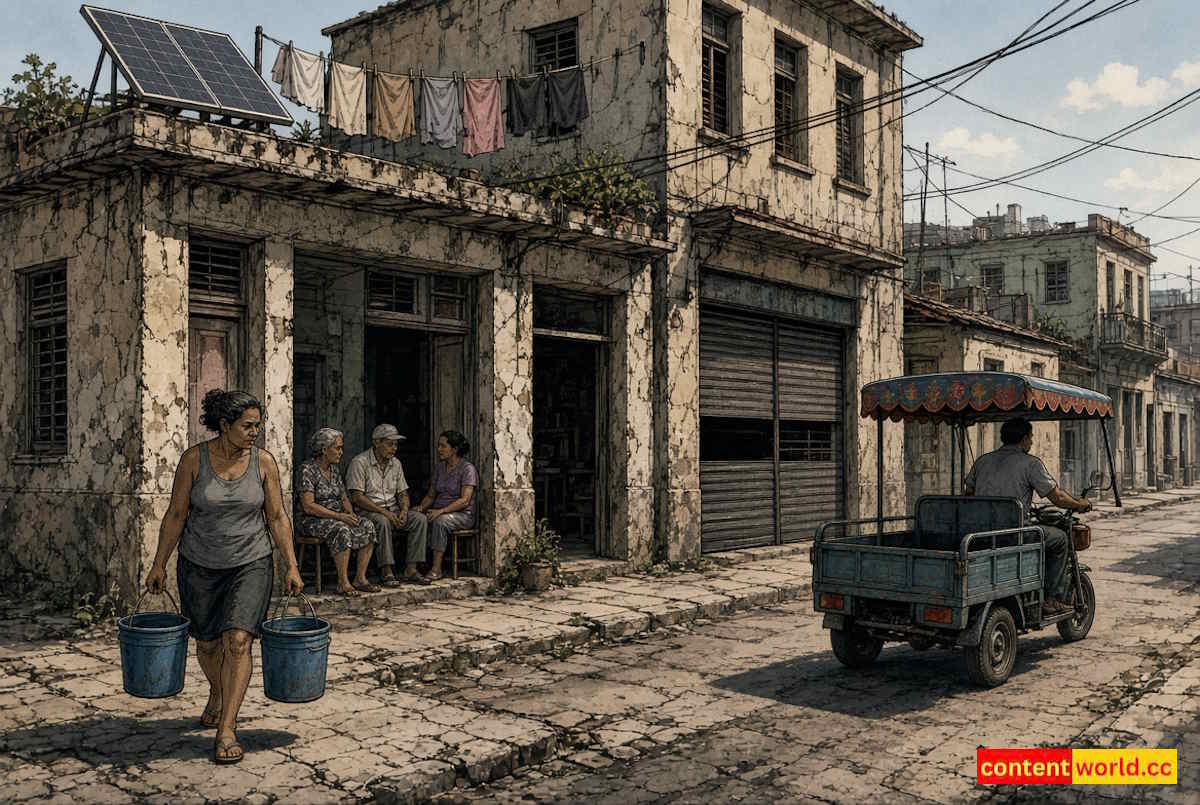 Daily life in the crisis – solar panel, fetching water, empty shop, e-scooter — everyday life off-grid.
Allies Who Cannot Save It
China remains the most important anchor. Beijing delivers solar kits, reaffirms Cuba’s sovereignty, and keeps trade channels open. Russia helps only in a limited way. Iran and other partners are themselves under pressure after recent conflicts. Latin America is split: some governments condemn Washington, few can or will provide substantial help.
The Cuban leadership is betting on time and on the hope that domestic pressure will not explode beyond control. So far it has succeeded. There have been cacerolazos — pot-banging in the dark — scattered protests, attacks on party offices. A mass movement like 2021 has not materialized. The security apparatus still works, the internet is throttled during unrest, potential leaders are in prison or have emigrated. Many people say openly that they are angry at both sides — their own government and Washington. Very few want to take to the streets. The risk is too high.
What Remains
As a reporter on the ground, what you see most clearly is the gap between rhetoric and lived reality. U.S. policy aims at the state but hits the population. The regime saves itself with reform promises without surrendering political control. China buys influence with solar panels. The island is aging, emptying out, and going dark.
Whether the system is still standing in 2028, as Rubio has suggested, or breaks earlier depends less on U.N. speeches than on three things: whether fuel starts flowing again somehow, whether the reforms actually produce goods and hard currency — and whether the security forces keep control when the next major blackout hits.
Havana is not finished. It is exhausted. The people here have learned to live in the dark. The question is how much longer — and who will turn the lights back on.
— Dispatch from Havana – article and images are AI generated.
 Contentworld – stories & news & daily freshest content for you!