Showdown in Belgrade: 150,000 People Celebrate the “Student List” – Serbia Faces a Fateful Election
On Thursday evening, Belgrade presented a scene that, until recently, few in Serbia would have thought possible: around Slavija Square—one of the capital’s major transport hubs—the crowds were so dense that they spilled over into the adjacent streets. According to estimates by the independent group “Archive of Public Gatherings,” approximately 150,000 people attended the final rally of the “Student List – Students Win.” Coming just three days before the snap parliamentary elections on Sunday, October 25, this served as an unmistakable signal to the government of Aleksandar Vučić.
The atmosphere in the square hovered between a public celebration and a moment of serious political intent. Flags were waved and chants calling for victory rang out, yet the crowd listened with rapt attention as ten candidates from the list took turns at the microphone. One of them, Tihomir Stanić, captured the essence of the movement in a single sentence: people are fed up with the fact that, in Serbia, not everyone is equal before the law. Other speakers put it even more starkly: on Sunday, citizens face a choice between Serbia and the mafia, between freedom and oppression, between a new beginning and decline.
At the same time, Vučić himself was holding his own campaign event—not outdoors, but inside a sports arena. This contrast alone speaks volumes about the nature of this election campaign: on one side, a movement that draws its strength from the streets; on the other, a politician who, for over a decade, has relied on a well-oiled party and state apparatus.
From a Collapsed Canopy to a Question of Power
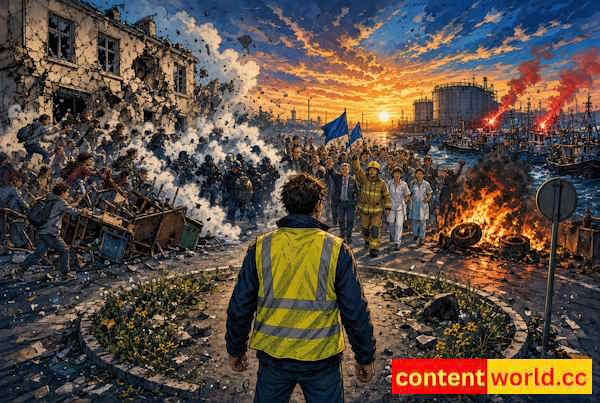
To understand why this election is garnering so much attention, one must look back two years. In November 2024, a concrete canopy collapsed at the newly renovated railway station in Novi Sad, killing 16 people. For many Serbians, the tragedy became a symbol of a system in which public contracts are awarded based on personal connections, and safety standards exist only on paper. It was primarily students who took to the streets in response—initially with a simple demand: a full investigation and accountability for those who died.
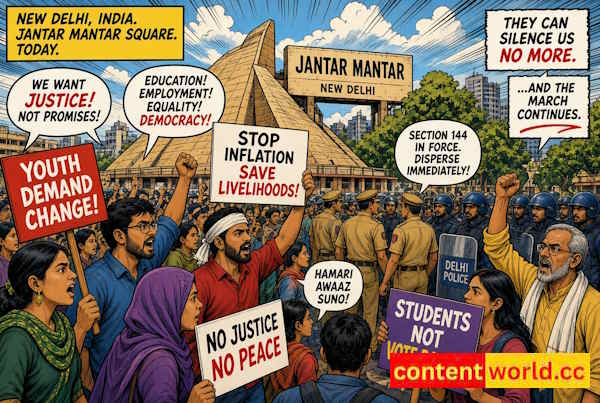
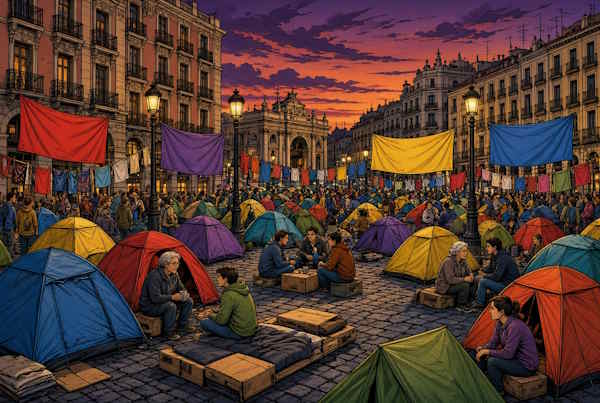
These protests evolved into one of the largest civic movements the country has seen since the fall of Slobodan Milošević. Universities were blockaded, and the movement was joined by school students, farmers, taxi drivers, and pensioners. Over time, the scope of the protests expanded: it was no longer just about the canopy in Novi Sad, but about corruption, the independence of the judiciary, media freedom, and the question of how much power a single individual should be allowed to amass in a state that officially aspires to join the European Union.
A core demand of the movement was for new elections. At the end of September, after nine years as president, Vučić stepped down, clearing the way for Sunday’s vote. However, he is not removing himself from the political arena entirely; he is now running for the office of head of government—a position he held previously, before becoming president. Critics view this as an attempt to merely repackage his power, while supporters praise him for submitting himself to the will of the electorate.
Also noteworthy is the form in which the opposition is running. The student-led list is not a traditional political party with a chairperson, a general secretary, and a party headquarters. It defines itself as a leaderless movement, with candidates selected and supported by students. For many voters who have grown disillusioned with the established opposition parties, this makes the movement a credible alternative. At the same time, it is an experiment: whether such a structure could form a stable government in the event of an election victory remains an open question—one that even its own sympathizers are pondering.
The fact that the question of who will hold power is being seriously raised at all is reflected in the polls. In a survey published on Tuesday, the independent institute “Nova srpska politička misao” (New Serbian Political Thought) placed the student-led list slightly ahead with 44.5 percent, compared to 42.7 percent for Vučić’s Serbian Progressive Party (SNS). This marks the first time in over a decade that an opposition list has led in a poll ahead of a national election. However, the publisher himself cautioned against interpreting these figures as a forecast—noting that they represent merely a snapshot in time—and added that reactions to the publication were, in some cases, “borderline hysterical.” Other polls suggest the two sides are running neck and neck.
The election campaign is being overshadowed by allegations from civil society. Observer groups report instances of intimidation, arrests, and the use of state resources for partisan purposes. The government denies these claims, accusing the protest movement instead of being directed from abroad—an accusation the students dismiss as a transparent diversionary tactic.
Source:
 contentworld – stories & news & daily freshest content for you!