The sacks that once carried cocoa beans across oceans now hang like scar tissue on building façades. Ibrahim Mahama, born in 1987 in Tamale, has turned these used jute sacks into a language of his own: roughly stitched, marked by the hands that once filled, emptied, and resold them. Since December 2025 he has topped Art Review’s Power 100 list — the first artist from the African continent to do so. The ranking honors not only his monumental installations but also the infrastructures he has built in his hometown.
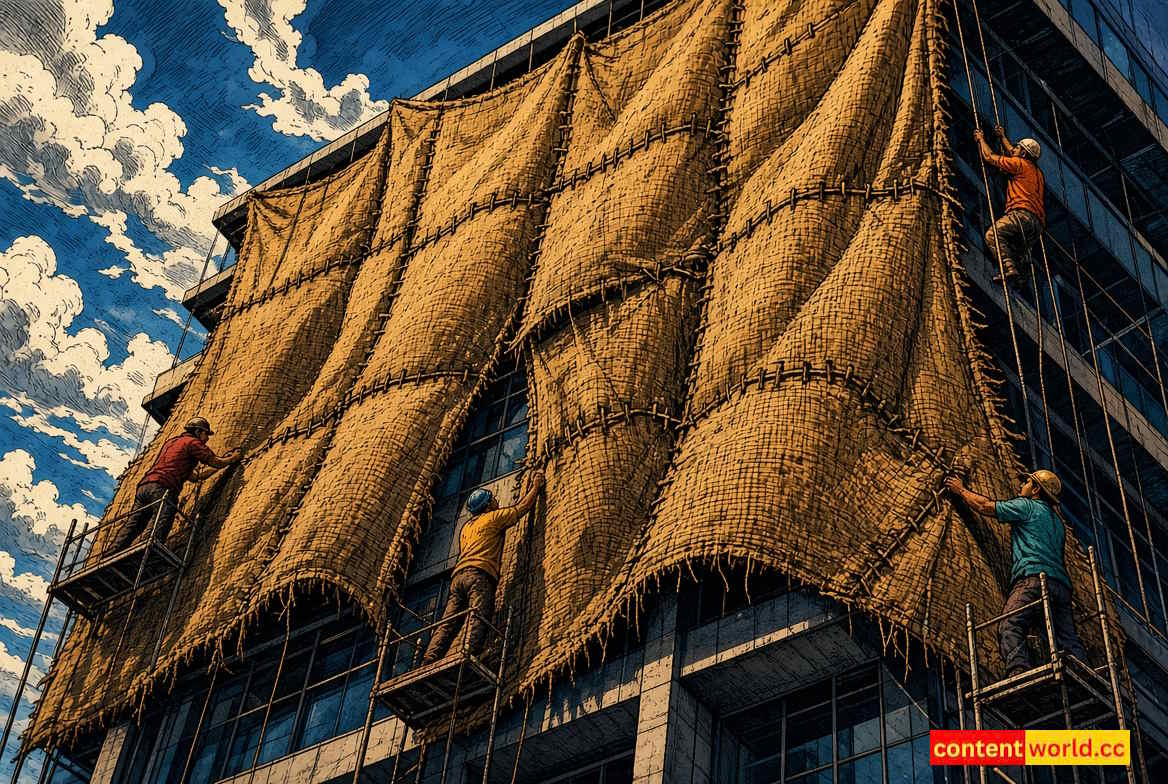
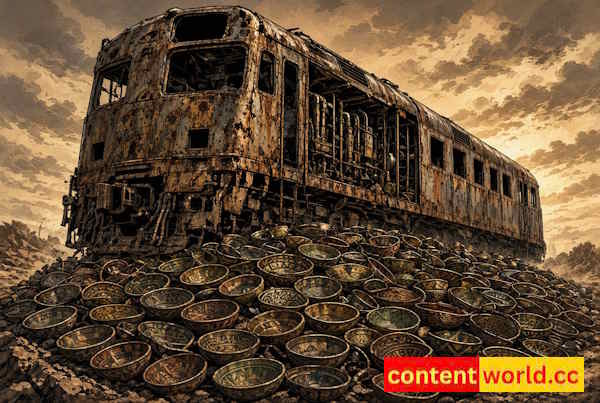
The sacks originate in Southeast Asia, arrive in Ghana for the cocoa trade, and then pass into the hands of local traders who use them for rice, maize, or charcoal. Mahama exchanges them for new ones, has teams stitch them into vast sheets, and drapes the results over buildings — from the Arsenale in Venice in 2015 to the Barbican in London and the Kunsthalle Bern. Every sack carries traces: stamps, names, wear. They make visible why goods cross borders more easily than people and render the invisible labor of the global cocoa trade physically tangible. In more recent works, decommissioned locomotives appear — British and German machines Ghana once acquired through IMF loans and later abandoned. At the Kunsthalle Wien a hollowed-out diesel locomotive rests on thousands of headpans, the traditional carrying vessels of everyday labor in Ghana. The materials become archives of exploitation and of failed development promises.
At the same time Mahama builds in Tamale. Proceeds from gallery sales flow into the Red Clay Studio, the Savannah Centre for Contemporary Art, and Nkrumah Volini. Residencies, student projects, and workshops take place there. The gesture is consistent: anyone who speaks about the distribution of value must also redistribute it.
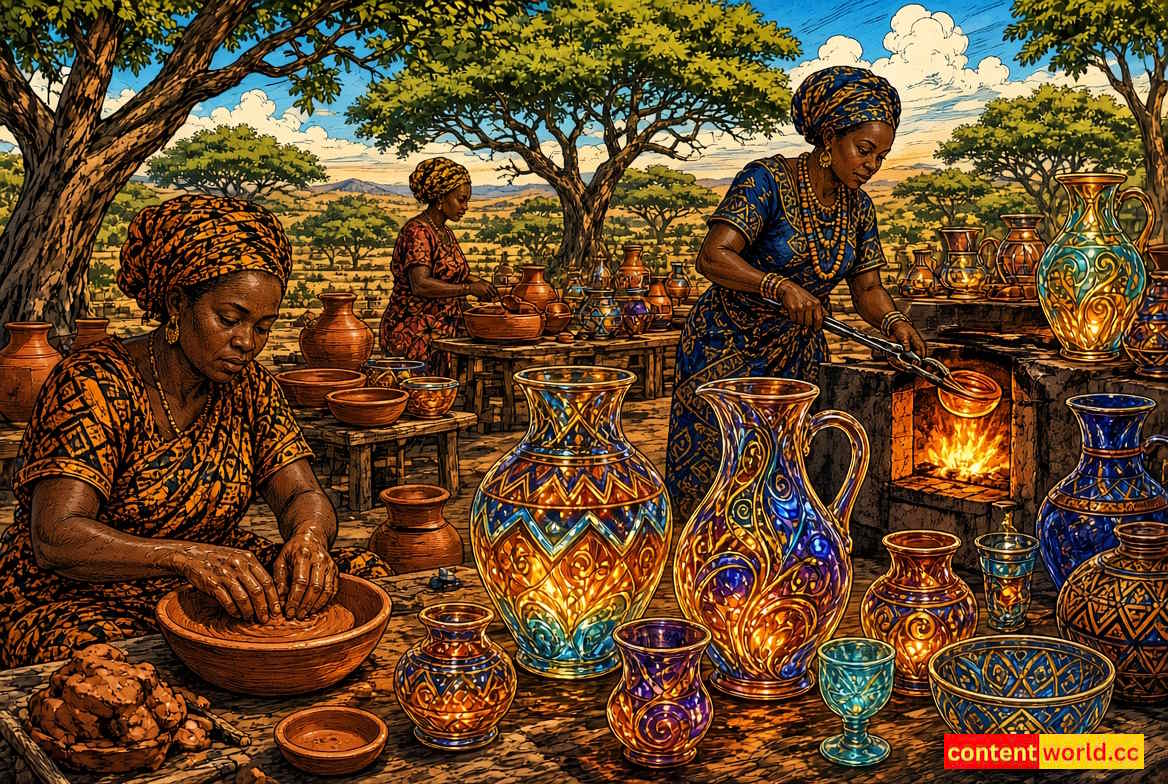
In current exhibitions the focus shifts toward the preservation of traditional crafts. In Venice, A Shea Garden (2026) presents vessels from northern Ghana — terracotta containers once used for grain and chicken feed — translated into Murano glass. The title refers to the shea tree of the savannah, whose nuts have been processed by women for generations. In São Paulo Mahama has already worked with materials that cross local and colonial histories within the Biennale framework. Both sites link the physical traces of past labor to the question of how craft knowledge survives when global markets render it invisible.
Mahama does not treat objects as raw material but as witnesses. The seams, the tears, the reused railway sleepers — they tell no linear story of progress, but one of ongoing transfer. What remains is the labor embedded in the materials, and the institutions that arise from it.
–
–
–
–
–
–
–
–
–
 SI gen text and images – contentworld – stories & news & daily freshest content for you!