
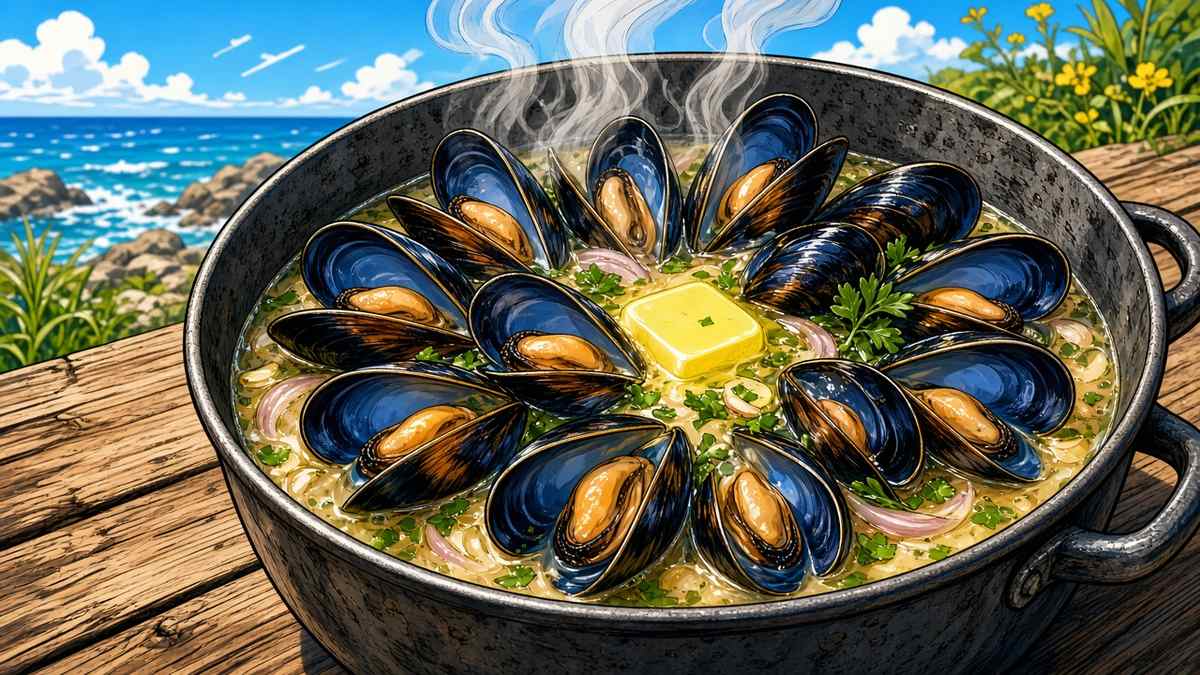
There is a moment, just after the lid comes off the pot, when a mussel dinner announces itself before anyone has taken a bite. A cloud of steam lifts, scented with shallot, garlic, and a dry white wine that has already given itself to the brine. The shells have opened like small black fans. The broth is gold and faintly green from parsley. A loaf of crusty white bread waits on the board, ready for a last swipe through the juices.
Mussels look modest, clamped shut in their dark blue shells. Then heat and wine undo that reserve in minutes, and what you taste is the sea itself — sweet, mineral, and clean — in a sauce that feels far richer than the short ingredient list would suggest. They are generous, too. A kilogram looks like a feast once it hits the table, and it cooks faster than most pasta. That mix of luxury and speed is why cooks from Brittany to the North Sea have trusted them for generations.
Most of the mussels we buy today come from rope or raft farms along cool Atlantic and North Sea coasts: Zeeland in the Netherlands, the bays of Brittany and Normandy, the Scottish sea lochs, and the rias of Galicia. Farmed mussels are not a lesser choice. They grow in clean, moving water, filter plankton as they always have, and arrive plump and reasonably priced. Wild beds still exist, but aquaculture is how most kitchens get a consistent shell.
Freshness is everything. Buy them on the day you plan to cook, from a fishmonger or a refrigerated counter with a fast turnover. The shells should look wet and tightly closed, or they should close when you tap them. They should smell like a clean tide, never sour or ammonia-sharp. Keep the bag loosely closed in the coldest part of the fridge, never sealed tight or sitting in melted ice water.
At the sink, the work is simple. Tip the mussels into a colander and rinse them under cold running water. Pull off the fibrous beard that pokes from the shell — a firm tug toward the hinge usually does it. If a shell is cracked, or if it stays open after a tap, discard it. Grit belongs in the sea, not in the broth, so rinse them once more after debearding.

White wine is not a garnish here. It is the partner the mussel has been waiting for. The briny liquor the shells release is savory and a little sweet; a dry white — Muscadet, a crisp Pinot Grigio, a simple Sauvignon Blanc, or a dry Riesling — brings acidity and perfume that lift that sweetness instead of burying it. Butter softens the edges. Shallot and garlic give the steam a backbone. In five or six minutes you have a broth that tastes as if it simmered all afternoon. Drink the same wine at the table: what went into the pot comes back in the glass.
Recipe: Mussels in White Wine
Serves 2 generously, or 3 as a lighter supper. Ready in about 25 minutes.
Ingredients
- 1 kg fresh mussels, cleaned
- 2 shallots, finely chopped
- 2 garlic cloves, thinly sliced
- 30 g unsalted butter
- 200 ml dry white wine
- A small bunch of flat-leaf parsley, chopped
- Freshly ground black pepper
- Optional: 50 ml cream, or a squeeze of lemon at the end
- Crusty white bread or a baguette, to serve
Method
- After cleaning the mussels, set them aside to drain. Chop the shallots, slice the garlic, and have the wine and butter within reach.
- Set a wide, heavy pot over medium heat and melt the butter. Add the shallots and cook for two or three minutes, stirring, until they turn translucent and smell sweet. Stir in the garlic for about 30 seconds, just until fragrant — do not let it brown.
- Pour in the white wine and let it come to a lively simmer. Give it a minute so the alcohol softens and the shallots perfume the liquid.
- Tip in the mussels, grind over a little black pepper, and clap on a tight lid. Cook over medium-high heat for 4 to 6 minutes, shaking the pot once or twice, until nearly all the shells have opened. Do not wander off. Overcooked mussels tighten and lose their tenderness.
- Lift the lid. Discard any mussels that have stayed firmly shut. Stir in most of the parsley. If you like a silkier broth, add the cream now and let it heat through off the boil. A squeeze of lemon is a brighter alternative.
- Carry the pot straight to the table, or ladle the mussels and plenty of broth into warm bowls. Scatter the last of the parsley on top. Set out the bread, napkins, and an empty bowl for the shells.
The bread is not a side dish. It is the second half of the recipe. Tear a piece of baguette, drag it through the wine-and-mussel liquor, and you will understand why this supper has never needed a complicated sauce. The crumb soaks up shallot, butter, and the sea.
That is the quiet magic of mussels in white wine. The shopping list is short, the cooking is almost abrupt, and the table still feels like a celebration — a coastal holiday you can set down on a weeknight, with steam in the air and bread in every hand.

–
–
–
–
–
—
–

contentworld – stories & news & daily freshest content for you!