
Topic of the day
Why Is Pax Silica Trending in the Philippines? The Controversy Explained
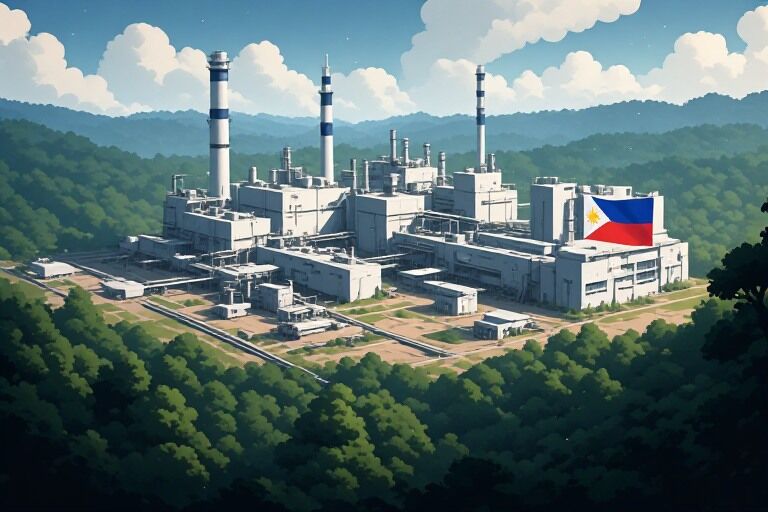
Pax Silica has quickly become a major topic of discussion in the Philippines in 2026. The name may sound like a new technology company or even something related to ordinary silica, but Pax Silica is actually a US-led international initiative focused on strengthening supply chains for artificial intelligence, semiconductors, critical minerals, advanced manufacturing, and related technologies.
The Philippines joined the initiative in April 2026 and has been discussing a major proposed industrial hub in New Clark City, Tarlac. Supporters see the project as an opportunity to attract billions of dollars in investment and create high-value jobs. Critics, however, have raised questions about environmental protection, water resources, land use, foreign influence, and the country’s relationship with the United States and China.
What Is Pax Silica?
Pax Silica was launched in late 2025 as an international framework designed to make technology supply chains more secure and resilient. Its focus includes critical minerals, semiconductor manufacturing, AI infrastructure, advanced manufacturing, energy, logistics, and digital infrastructure.
The initiative is closely connected to the growing competition between the United States and China over advanced technology. Modern AI systems require enormous amounts of computing power, while semiconductors depend on complex international supply chains and specialized minerals. Pax Silica aims to bring participating countries closer together so they can develop alternative and more secure sources of these materials and technologies.
The Philippines became the thirteenth signatory when it joined in April 2026. The government has promoted the country’s location, workforce, existing semiconductor industry, and mineral resources as potential advantages within the initiative.
Why Is the Philippines Involved?
The Philippines already has an important role in the global electronics industry and possesses significant deposits of minerals such as nickel, copper, and cobalt. The government wants to move beyond simply exporting raw materials and instead develop more processing, manufacturing, and technology industries inside the country.
Under the Pax Silica framework, the Philippines and the United States have proposed a large industrial development in New Clark City. The planned economic security zone covers roughly 1,600 hectares and is intended to support AI, semiconductor, advanced manufacturing, and related industries.
The Economic Opportunity
For supporters, the potential economic benefits are one of the strongest arguments in favor of the project. Philippine officials have said the development could attract between US$40 billion and US$70 billion in investments once fully developed and potentially generate more than 130,000 high-quality jobs.
These jobs could include opportunities for engineers, researchers, technology professionals, computer science graduates, and workers involved in advanced manufacturing. The government hopes this could help turn the Philippines into a higher-value participant in global technology supply chains rather than remaining primarily a supplier of raw materials and lower-value manufacturing services.
Why Are People Concerned?
The controversy is largely about what could happen if a project of this scale is developed without strong safeguards. Environmental groups and other critics have raised concerns about water consumption, environmental impacts, land use, displacement, and the possibility of foreign interests gaining too much influence over strategically important infrastructure.
Water has become one of the most visible concerns. Large technology and industrial facilities can require substantial amounts of water, particularly when they involve semiconductor manufacturing and other industrial processes. Philippine officials have said that studies by the National Water Resources Board indicate that available water sources in the proposed area can meet the project’s requirements without reducing supplies for surrounding communities. The government has also said that water allocation will be monitored by relevant agencies.
What About the Environment?
Environmental protection is another major issue. Critics want guarantees that industrial development will not damage ecosystems or place excessive pressure on local resources.
The Bases Conversion and Development Authority has said that projects connected to the development will have to comply with Philippine environmental laws and obtain the necessary Environmental Compliance Certificates before construction. Officials have also said that at least 40 percent of the proposed development area is planned for open spaces, parks, and green areas.
Importantly, BCDA has also clarified that mining will not take place inside the proposed Pax Silica site. Instead, the planned hub is intended to process critical minerals and turn them into higher-value products for industries such as semiconductors and advanced manufacturing.
Is Pax Silica About China?
This is where the issue becomes particularly sensitive. Pax Silica is officially presented as a supply-chain security initiative, but it exists against the backdrop of intense US-China competition over AI, semiconductors, critical minerals, and advanced technology.
The United States wants partner countries to reduce dependence on supply chains that could be vulnerable to geopolitical pressure. For the Philippines, participation therefore has both economic and strategic implications.
Some observers see this as a chance for the Philippines to diversify its economic partnerships and gain access to advanced technology and investment. Others worry that becoming deeply involved in a US-led technology network could make it harder for Manila to maintain a balanced relationship with China, one of its major trading partners.
Those concerns have become even more relevant as Washington pushes Pax Silica toward a more exclusive structure. In August 2026, Reuters reported that the United States was preparing to tell partner countries they would need to choose between competing US- and China-led AI frameworks if they wanted to remain part of the US-led coalition.
Is the Project Already Happening?
Not yet in the sense of a completed industrial park filled with factories and data centers. The Philippines and the United States are still negotiating the framework for the proposed development.
Philippine officials have said contract negotiations are expected in 2026, with planning potentially beginning in 2027 and construction projected to start in early 2028. The exact companies, investments, and final configuration of the site are still being worked out.
Why Pax Silica Matters
The debate over Pax Silica reflects a much larger question facing the Philippines: how can the country attract advanced technology and investment while protecting its environment, communities, economic independence, and national interests?
If successfully managed, the initiative could help the Philippines move further into semiconductor production, critical-mineral processing, AI infrastructure, and advanced manufacturing. It could create skilled jobs and encourage companies to build more sophisticated industries locally.
But the concerns cannot simply be dismissed. Water resources, environmental safeguards, land use, transparency, labor standards, and the country’s geopolitical position will all matter as negotiations continue.
Pax Silica is therefore more than just another industrial project. It represents the Philippines’ attempt to position itself in the rapidly changing global technology economy while navigating an increasingly competitive relationship between major powers. Whether it becomes a major economic opportunity or a source of long-term controversy will depend largely on how the project is negotiated, regulated, and implemented.

Entertainment of the day with Nina Ninanovicy

Cooking of the day

Crispy Oven-Baked Chicken Wings
Crispy chicken wings do not need a deep fryer to taste delicious. With a hot oven, a simple seasoning mixture, and one clever ingredient—baking powder—you can make golden, crunchy wings with juicy meat inside. Baking powder helps dry and crisp the skin as the wings cook.
Ingredients
- 2 pounds (900 g) chicken wings, split into drumettes and flats
- 1 tablespoon aluminum-free baking powder
- 1 teaspoon salt
- 1 teaspoon garlic powder
- 1 teaspoon paprika
- 1/2 teaspoon onion powder
- 1/2 teaspoon black pepper
- 1 tablespoon olive oil
Optional Honey Garlic Sauce:
- 2 tablespoons honey
- 2 tablespoons soy sauce
- 1 tablespoon melted butter
- 1 clove garlic, minced
How to Make Crispy Chicken Wings
Preheat the oven to 425°F (220°C). Line a large baking sheet with foil and place a wire rack on top. The rack allows hot air to circulate around the wings, helping the skin become crisp on all sides.
Pat the chicken wings very dry with paper towels. This is an important step because excess moisture can prevent the skin from becoming properly crispy.
In a large bowl, combine the baking powder, salt, garlic powder, paprika, onion powder, and black pepper. Add the wings and toss until they are lightly and evenly coated. Make sure you use baking powder, not baking soda.
Arrange the wings in a single layer on the prepared wire rack. Leave a little space between them so the hot air can circulate. Avoid stacking or overlapping the wings.
Bake for about 40–45 minutes, turning the wings halfway through cooking. Continue baking until the skin is deeply golden, crisp, and the chicken is cooked through. Chicken should reach at least 165°F (74°C) internally for food safety.
Make the Honey Garlic Sauce
While the wings are baking, combine the honey, soy sauce, melted butter, and minced garlic in a small saucepan. Warm over low heat for 2–3 minutes, stirring occasionally, until the sauce is smooth and slightly thickened.
When the wings are finished, transfer them to a large bowl and drizzle with the sauce. Toss gently until the wings are evenly coated. For maximum crispiness, add the sauce immediately before serving rather than letting the wings sit in it for a long time.
Serving Tips
Serve the wings hot with ranch dressing, blue cheese dip, or your favorite chili sauce. Celery sticks, carrot sticks, or a simple green salad make refreshing sides.
For extra-crispy wings, you can season the chicken and leave it uncovered in the refrigerator for several hours before baking. This allows the surface to dry further and can improve the final texture.
Whether served plain, tossed in honey garlic sauce, or coated with spicy Buffalo sauce, these oven-baked wings are an easy way to enjoy crispy chicken without the mess of deep frying.

Cecilia – Lady of the day


Basic knowledge of the day
Inner happiness and contentment
1. Perceiving the present moment
The first step is surprisingly unspectacular: pausing. Many people chase after happiness without realizing that they never actually arrive in the moment.
- Build in short breaks
- Observe your breathing
- Notice bodily sensations
- Observe thoughts without judging them
It sounds simple, but it is the foundation for everything else. Without presence, there is no true happiness.
2. Developing emotional self-kindness
Inner contentment arises when you stop fighting against yourself.
- Treat yourself as you would treat a good friend
- Accept mistakes as part of being human
- Give yourself permission not to be perfect
Self-compassion is not a “soft” concept—it is one of the most powerful psychological resources we have.

3. Clarifying what truly matters to you
Many people live according to the expectations of others. Happiness arises when you know your own values.
Helpful questions:
- What gives my life meaning?
- What kind of person do I want to be?
- Which activities give me energy instead of draining it?
When you know your values, your daily life automatically becomes more aligned.
4. Small, consistent actions
Happiness is less of a feeling and more of a by-product of actions that align with your values.
Examples:
- If health is important to you → 10 minutes of movement
- If connection is important to you → an honest message to someone
- If creativity is important to you → 5 minutes of writing, drawing, or making music
Small steps beat grand resolutions.
5. Disempowering the inner critic
The inner critic is often the biggest obstacle to happiness.
Strategies:
- Recognize thoughts as “just thoughts”
- Avoid identifying with every internal comment
- Use humor (“Ah, there goes my ‘catastrophe-thinking studio’ again”)
This creates freedom.
6. Cultivate gratitude—but make it genuine, not forced
Gratitude only works if it is authentic.
- 1–2 things each day that were truly good
- Keep it simple: a smile, a good coffee, or a quiet moment is enough
- Feel the moment consciously; don’t just write it down
This trains the brain to notice the positive more keenly.
7. Nurture relationships
Humans are social beings. Satisfaction rarely comes from going it alone.
- Honest conversations
- People who uplift rather than drain you
- Setting boundaries where necessary
Connection is one of the most powerful factors for happiness.
8. Accept that happiness isn’t constant
Inner contentment doesn’t mean always being in a good mood. It means being at peace with yourself—even on difficult days.
The paradox: the less you force happiness, the more likely it is to arise.