Few artists have left a mark on hip-hop quite like MF DOOM. Recognized instantly by his iconic metal mask and clever lyricism, MF DOOM built a career that challenged the norms of mainstream rap. Instead of chasing radio hits or celebrity status, he focused on storytelling, complex wordplay, and unforgettable production. His music rewarded careful listening, often revealing new meanings with every replay.
Although many artists become famous because of their personalities, MF DOOM intentionally remained mysterious. He rarely appeared without his mask, gave few interviews, and often let his music speak for itself. This unusual approach helped create one of the most fascinating personas in modern music. Years after his passing, his influence continues to inspire rappers, producers, and music lovers around the world.
This guide explores the life, career, music, alter egos, collaborations, and legacy of MF DOOM, explaining why he is widely regarded as one of the greatest underground hip-hop artists of all time.
Who Was MF DOOM?
MF DOOM was born Daniel Dumile on July 13, 1971, in London, England. While he was born in the United Kingdom, he spent nearly all of his childhood in Long Island, New York, where he developed his love for hip-hop during its early years.
Growing up during the golden age of rap, Dumile became fascinated with lyricism, sampling, comic books, cartoons, and jazz music. These influences would eventually shape his unique artistic identity.
Unlike many rappers who focused on glamorous lifestyles or commercial success, DOOM built his music around imagination. His songs often referenced superheroes, science fiction, old television shows, monster movies, comic books, and obscure cartoons. This creative blend gave his work a timeless quality that continues to attract new listeners.
The Early Days: KMD
Before becoming MF DOOM, Daniel Dumile performed under the name Zev Love X as part of the hip-hop group KMD. Formed with his younger brother Dingilizwe “DJ Subroc” Dumile and Rodan, KMD emerged in the late 1980s as an intelligent and socially conscious rap group.
Their debut album, Mr. Hood (1991), stood out for its humor, positive themes, and creative sampling. Critics praised the album’s originality, although it achieved only modest commercial success.
KMD’s second album, Black Bastards, took a darker and more experimental direction. Unfortunately, tragedy struck before the album could be released. In 1993, DJ Subroc was killed after being hit by a car while crossing a highway. His death deeply affected Daniel Dumile both personally and professionally.
Shortly afterward, Elektra Records canceled the release of Black Bastards, reportedly because of concerns over its controversial cover artwork. Losing his brother and his record deal within such a short period pushed Dumile into one of the most difficult periods of his life.
The Birth of MF DOOM
Following several years away from the public eye, Daniel Dumile returned in the late 1990s with an entirely new identity: MF DOOM.
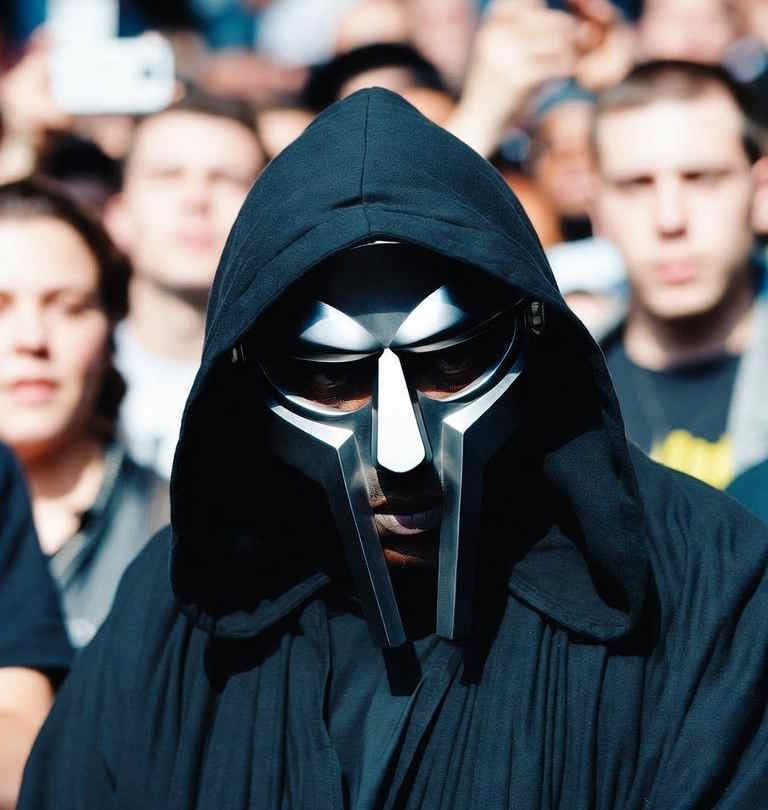
The name combined several meanings, including “Metal Face” and references to the Marvel Comics villain Doctor Doom. Wearing a metal mask inspired by the comic book character, DOOM reinvented himself as a mysterious supervillain rather than a traditional rapper.
The mask represented more than a costume. It symbolized anonymity and shifted listeners’ attention away from appearance and toward the music itself. DOOM often explained that audiences should focus on the art instead of the artist.
His performances reinforced this philosophy. Fans never knew exactly what to expect, and the mystery surrounding his identity became part of his legend.
Operation: Doomsday
In 1999, MF DOOM released his debut solo album, Operation: Doomsday. The project immediately earned praise within underground hip-hop communities for its inventive production, humorous storytelling, and incredibly dense lyricism.
Unlike polished mainstream rap albums of the era, Operation: Doomsday embraced a raw and homemade sound. DOOM sampled cartoons, soul records, old television clips, jazz, and vintage recordings, creating a style that felt nostalgic yet completely original.
The album introduced many elements that would become trademarks of his career. His verses featured internal rhymes, unexpected punchlines, unusual metaphors, and references to everything from comic books to food.
Songs such as “Doomsday,” “Rhymes Like Dimes,” and “Gas Drawls” remain fan favorites and are often recommended as starting points for new listeners.
A Completely Different Style of Rapping
MF DOOM’s lyrical style differed dramatically from many of his contemporaries. Rather than writing straightforward verses, he layered multiple rhymes within single lines, frequently changing topics without warning before cleverly returning to his original point.
His flow often ignored traditional song structures. Instead of obvious hooks and repetitive choruses, DOOM preferred long, uninterrupted verses packed with references that rewarded repeated listening.
Many critics have compared reading DOOM’s lyrics to solving puzzles. Fans often discover new jokes, hidden meanings, and clever wordplay years after first hearing a song.
This complexity helped establish MF DOOM as one of hip-hop’s greatest lyricists. While casual listeners could enjoy his unique voice and production, dedicated fans appreciated the extraordinary craftsmanship behind every verse.
Building an Underground Legend
Throughout the late 1990s and early 2000s, MF DOOM steadily built a loyal following. Rather than pursuing chart success, he focused on creating music that reflected his artistic vision. Independent record labels, underground radio stations, and passionate fans embraced his originality.
His concerts attracted audiences who appreciated technical lyricism and creative storytelling more than commercial trends. Although he never became a traditional pop superstar, his influence continued to grow with every project he released.
Madvillain: A Landmark Collaboration
In 2004, MF DOOM teamed up with producer Madlib to release what many fans and critics consider his greatest work: Madvillainy. Released under the duo name Madvillain, the album quickly became one of the most influential underground hip-hop records ever made.
Madlib was already known for his creative sampling and unconventional production. Together with DOOM’s intricate lyricism, the pair created an album unlike anything else available at the time. Instead of polished radio-ready songs, Madvillainy featured short tracks, unusual song structures, and beats built from jazz, soul, psychedelic rock, and obscure records.
The chemistry between the two artists was remarkable. Madlib’s unpredictable instrumentals gave DOOM the perfect canvas for his imaginative storytelling and complex rhyme schemes. Every track felt carefully crafted while maintaining an effortless, spontaneous quality.
Songs such as “Accordion,” “All Caps,” “Raid,” and “Fancy Clown” remain among the most celebrated tracks in underground hip-hop history. Even decades after its release, Madvillainy regularly appears on lists of the greatest rap albums ever made.
MM..FOOD: Humor Meets Creativity
Also released in 2004, MM..FOOD showcased another side of MF DOOM’s creativity. As the title cleverly spells “MF DOOM” when rearranged, the album revolves around food-related themes while exploring everyday life, relationships, and society.
Rather than creating a novelty record, DOOM used food as a creative framework for sophisticated lyricism. Songs referenced snacks, restaurants, cooking, and dining while simultaneously delivering deeper commentary and witty observations.
Tracks like “Beef Rap,” “Hoe Cakes,” “One Beer,” and “Rapp Snitch Knishes” became fan favorites. The album demonstrated DOOM’s ability to turn seemingly ordinary subjects into fascinating stories filled with layered metaphors and unforgettable punchlines.
Today, MM..FOOD remains one of the most accessible entry points for listeners discovering MF DOOM for the first time.
Danger Doom: A Different Kind of Collaboration
MF DOOM constantly experimented with new ideas, and one of his most memorable collaborations came with producer Danger Mouse. Together they formed the duo Danger Doom, releasing the album The Mouse and the Mask in 2005.
The project celebrated Cartoon Network’s Adult Swim programming by incorporating dialogue and appearances from popular animated shows. Characters from series like Aqua Teen Hunger Force, Space Ghost Coast to Coast, and Harvey Birdman appeared throughout the album.
Despite its humorous concept, the music remained technically impressive. Danger Mouse blended playful production with DOOM’s lyrical creativity, resulting in one of the most entertaining projects in his catalog.
The Many Faces of MF DOOM
One reason MF DOOM’s discography feels so rich is that he frequently recorded under different aliases. Rather than treating these names as simple stage names, he gave each character its own personality and creative purpose.
King Geedorah
Inspired by the three-headed monster from the Godzilla films, King Geedorah represented the producer and storyteller side of DOOM. The 2003 album Take Me to Your Leader focused heavily on production while featuring numerous guest artists.
The project demonstrated that DOOM was not only an exceptional rapper but also a highly respected beat maker capable of creating cinematic instrumentals filled with unexpected samples.
Viktor Vaughn
Viktor Vaughn presented a younger, more energetic character. Albums such as Vaudeville Villain explored futuristic themes while showcasing faster flows and a slightly different lyrical approach.
Using multiple personas allowed DOOM to explore new creative directions without feeling restricted by expectations. Fans appreciated how each identity expanded his fictional universe while remaining unmistakably his own work.
A Master of Sampling and Production
Although MF DOOM receives enormous praise as a lyricist, he was also an outstanding producer. Many of his beats featured carefully selected samples from jazz, soul, funk, classic television, cartoons, educational films, and international recordings.
Rather than hiding his influences, DOOM transformed familiar sounds into something entirely new. He often chopped tiny portions of records into unique rhythms, creating warm, dusty instrumentals that felt nostalgic yet innovative.
His production style inspired countless independent producers who admired his willingness to embrace imperfections instead of chasing overly polished studio sounds.
The balance between creative sampling, relaxed drum programming, and memorable melodies became one of the defining characteristics of the underground hip-hop movement during the 2000s.
The Meaning Behind the Mask
Perhaps nothing symbolizes MF DOOM more than his iconic metal mask. Inspired by Marvel’s Doctor Doom, the mask became one of the most recognizable images in hip-hop history.
For DOOM, however, it represented much more than visual branding. He believed listeners should judge music based on creativity rather than appearance, celebrity culture, or popularity.
The mask also reinforced his fictional supervillain character. Throughout interviews and performances, he blurred the line between Daniel Dumile and MF DOOM, allowing the persona to become larger than life.
This mystery contributed significantly to his legend. Fans became fascinated not only by the music but also by the mythology surrounding the artist himself.
Performances and the “DOOMposter” Controversy
MF DOOM occasionally attracted controversy for reportedly sending masked stand-ins, nicknamed “DOOMposters,” to perform at some concerts instead of appearing himself. While some fans were frustrated, others argued that the practice fit perfectly with his supervillain persona and challenged traditional ideas about celebrity and performance.
Regardless of public opinion, the incidents added another layer to DOOM’s mystique. His career consistently blurred the boundaries between reality, fiction, performance art, and music.
Why Artists Admire MF DOOM
Many respected rappers and producers have cited MF DOOM as one of their greatest influences. Artists admire his fearless creativity, technical lyricism, independent spirit, and refusal to compromise his artistic vision.
Unlike musicians who constantly adapted to commercial trends, DOOM remained true to his unique style throughout his career. His consistency earned enormous respect within hip-hop communities around the world.
Today, his influence can be heard in countless underground and mainstream artists who emphasize storytelling, lyrical complexity, and inventive production.
Featured Video: “Accordion” by Madvillain
Essential Albums for New Listeners
If you’re discovering MF DOOM for the first time, his extensive catalog may seem overwhelming. Fortunately, several albums provide an excellent introduction to his music while showcasing different aspects of his creativity.
- Operation: Doomsday (1999) – His debut solo album and the perfect introduction to the MF DOOM persona.
- Madvillainy (2004) – A collaboration with Madlib that many consider one of the greatest hip-hop albums ever created.
- MM..FOOD (2004) – A witty, food-themed album packed with memorable songs and imaginative lyricism.
- The Mouse and the Mask (2005) – A fun collaboration with Danger Mouse featuring Adult Swim characters.
- Vaudeville Villain (2003) – Released as Viktor Vaughn, showcasing another side of DOOM’s storytelling abilities.
Recommended Songs
While every fan has personal favorites, these tracks are frequently recommended as essential listening:
- Doomsday
- Rhymes Like Dimes
- Accordion
- All Caps
- One Beer
- Hoe Cakes
- Beef Rap
- Raid
- Fancy Clown
- Rapp Snitch Knishes
Each song highlights a different aspect of DOOM’s artistry, whether it’s his storytelling, humor, production, or remarkable ability to weave together complex rhyme patterns.
The Final Chapter
On December 31, 2020, the world learned that Daniel Dumile had passed away on October 31 of that year. His family chose to keep the news private for several weeks, allowing them time to grieve before making a public announcement.
The news shocked the music world. Fans, fellow artists, producers, and critics paid tribute to one of hip-hop’s most original voices. Tributes poured in from around the globe, celebrating not only his music but also his dedication to artistic independence.
Although his life ended far too soon, his work continues to inspire millions of listeners. Albums that were once considered underground classics are now widely recognized as masterpieces of modern hip-hop.
Why MF DOOM Still Matters
One of the reasons MF DOOM remains so influential is that his music doesn’t rely on trends. While many songs from the early 2000s sound tied to their era, DOOM’s work feels timeless thanks to its imaginative writing, creative production, and unique personality.
Streaming services and social media have introduced his music to younger audiences who were too young to experience his original releases. Every year, new listeners discover his catalog and quickly understand why longtime fans hold him in such high regard.
His influence extends beyond rap music. Producers, writers, filmmakers, illustrators, and designers often cite his work as an example of originality and creative freedom. His ability to build an entire fictional universe around his music continues to inspire artists across many creative fields.
Frequently Asked Questions
Why did MF DOOM wear a mask?
The mask shifted attention away from celebrity and appearance, encouraging audiences to focus on the music itself. It also strengthened his comic book-inspired supervillain persona.
What does MF DOOM stand for?
The initials are commonly interpreted as “Metal Face DOOM,” referring to the famous metal mask worn throughout his career.
What is considered his best album?
Many critics regard Madvillainy as his masterpiece, although fans often debate between Operation: Doomsday, MM..FOOD, and several of his collaborative projects.
Was MF DOOM also a producer?
Yes. In addition to being one of hip-hop’s finest lyricists, he produced many of his own beats and earned enormous respect for his sampling techniques and creative instrumentals.
Why does he have so many stage names?
Each alias represented a different fictional character or creative perspective. By adopting multiple identities, DOOM expanded his artistic universe and experimented with new concepts while keeping listeners engaged.
Featured Video: “One Beer”
Featured Video: “Rapp Snitch Knishes”
Final Thoughts
MF DOOM built a career unlike any other artist in hip-hop. By combining unforgettable lyricism, imaginative production, comic book influences, and a commitment to artistic independence, he created a body of work that continues to captivate listeners around the world.
Rather than chasing fame or commercial success, DOOM focused on originality. His music challenged audiences to listen carefully, think creatively, and appreciate the craftsmanship behind every verse. Whether performing as MF DOOM, King Geedorah, Viktor Vaughn, or within collaborations like Madvillain and Danger Doom, he consistently pushed the boundaries of what hip-hop could be.
Today, his legacy is stronger than ever. New generations of fans continue to discover his albums, while established artists regularly acknowledge his influence on modern rap and music production. His mask became an icon, but it was always the imagination behind it that truly mattered.
For anyone interested in intelligent lyricism, inventive beats, and fearless creativity, MF DOOM’s catalog remains essential listening. His work serves as a reminder that great art doesn’t need to follow trends—it simply needs to be authentic, original, and unforgettable.
R.I.P. MF DOOM