Hormuz deal scrapped: Iran and the Houthis squeezed too hard—and Riyadh pulls the emergency brake. And much more at contentworld: Eileen from Prague, good morning with Yoana, cooking and money talk.
Topic of the day
Hormuz deal scrapped:
Iran and the Houthis squeezed too hard
and Riyadh pulls the emergency brake.
Iran and its Yemeni Houthi allies may have overplayed their hand by reaching for the Bab al-Mandab Strait on the Red Sea. Pushing too hard risks a backlash. At the same time, Tehran’s plan to effectively cement control over the Strait of Hormuz in the Persian Gulf—without American approval, but with the region’s littoral states—is stalling.
As recently as the weekend, Iranian President Masoud Pezeshkian sounded confident of success: an agreement between the two Hormuz littoral states—Iran and Oman—regarding future passage rules was scheduled to be announced in Oman on Monday. On Sunday evening, however, Omani Foreign Minister Badr Albusaidi withdrew his commitment, explicitly citing the “interest of consensus.” This referred to the approval of the Arab Gulf states, which were expected to support the Iranian-Omani deal. Even Saudi Arabia—currently under attack by the Houthis on both land and sea—was supposed to be involved. According to an Iranian spokesperson, Riyadh is now “blocking” the meeting. Tehran will demand at least one thing from the Saudis: pressure on the Houthis. Whether the Houthis will actually heed Tehran remains unclear, however.
Ideologically, the Houthis are close to Iran: they are anti-imperialist regarding the US (while Russian and Chinese imperialism bother them far less) and are not merely anti-Israel, but openly antisemitic. Yet, as a Shiite force within the “Axis of Resistance,” they differ from the other militias. The Houthis belong to the Zaydi branch—or “Fiver” Shia Islam—and their theology and self-conception operate differently. They consider themselves clearly superior to the Iranian mullahs; the model of the Islamic Republic, in which the Supreme Leader is regarded as the deputy of the Hidden Twelfth Imam, is simply irrelevant to them.

Entertainment of the day
Yo had actually just wanted to take out the trash for a moment. Pajamas on, slippers on, “three seconds”—a classic rookie mistake.
Outside, the morning was embarrassingly bright. The neighbor’s cat sat on the fence like a panel of judges. Yo folded the trash bag shut, turned around… and realized: the garden door had clicked shut. From the inside. With the key. Inside the house. So there stood Yo in pajamas in the middle of the garden, as if “outdoor pajama chic” were the latest trend. The mailman waved. Yo waved back—a bit too confidently. Then she saw the tree.
Not just any tree. *The* tree. The kind where you look up “just for a second” and suddenly find yourself performing acrobatics.
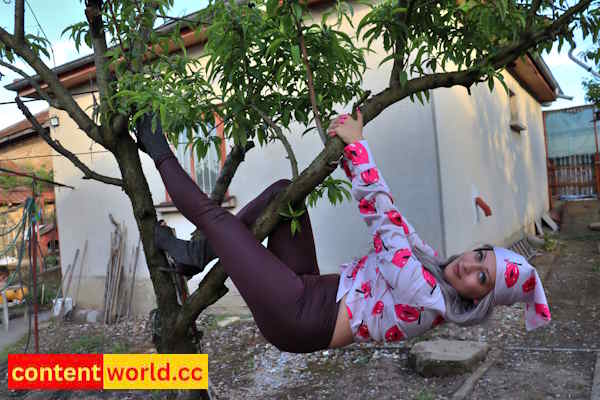
First, a cautious grasp of the branch. Then, a leg hoisted up, as if doing yoga in flannel were perfectly normal. Then—since the patio door remained stubbornly shut—the full routine: knees up, a swing, one leg wrapped around the trunk, arms working a pole that nobody ordered. The slippers gave up the ghost; one landed in the flowerbed, while the other protested silently on her foot.
Yo hung at an angle from the branch for a moment, pajama pant leg flapping in the wind, thinking: Either I get inside now—or this is going to be the family photo of the year. The neighbor’s cat blinked appreciatively. A branch snapped somewhere. Yo climbed—not elegantly, but with determination: a twist, a slide, a “that was totally intentional” moment, and finally, a last acrobatic hop toward the windowsill. Rescue via the window. Slippers later. Dignity: bruised, but victorious.
Since then, Yo swears: Next time, a coat. Or at least deodorant. And if there’s going to be tree acrobatics—then only with an audience that pays in applause.

Cooking of the day
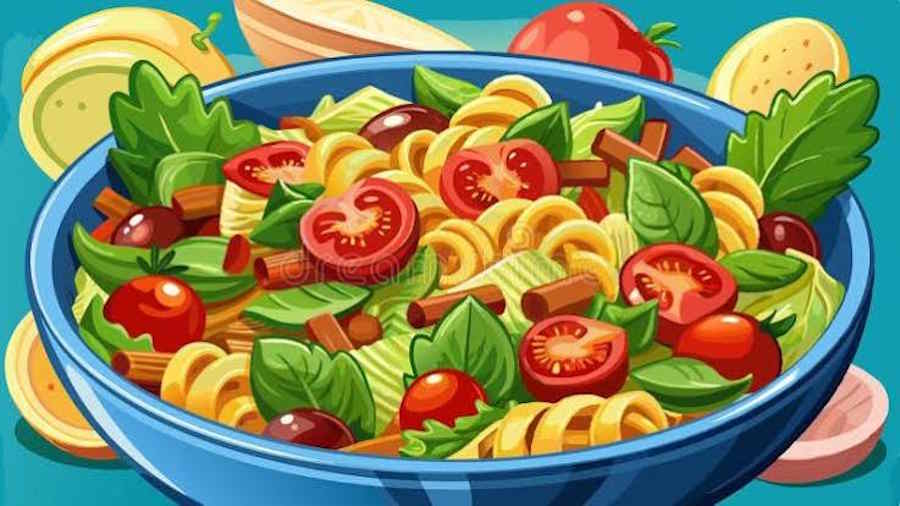
How about a hearty, Mediterranean pasta salad with chickpeas, feta, and colorful vegetables today?
This cold dish is perfect for preparing ahead, light on the stomach, and keeps you full for a particularly long time thanks to the combination of complex carbohydrates and proteins.
🥗 The Satiating Mediterranean Pasta Salad
What goes in:
- For the base: Whole grain pasta (e.g., penne or fusilli) – the fiber ensures long-lasting satiety.
- For the proteins: A small can of chickpeas (rinsed and drained) and cubed feta cheese.
- For vitamins & freshness: Halved cherry tomatoes, cucumber slices, diced bell peppers, and a few black olives.
- For the dressing: A simple dressing made from good olive oil, a squeeze of lemon juice, some garlic, salt, pepper, and dried oregano.
Why this dish is perfect for today:
- No cooking at the critical moment: You only need to briefly cook the pasta and let it cool; the rest is just quick chopping.
- Perfect for on-the-go: The salad tastes even better when it has marinated in the fridge for an hour or two.
- Versatile: You can flexibly swap out the vegetables for whatever you have left in the fridge (e.g., arugula or green onions).
Does this suit your taste?

Lady of the day
Eileen from Prague ❤️

–

–
 –
–

–
–

Basic knowledge of the day
The Technical Foundation of Digital Money
Almost everyone uses bank cards, online banking, or smartphones for payments every day, yet very few know how this system works behind the scenes.
How Digital Money and Bookkeeping Work
- Money is information today: Most money does not exist as cash in a vault, but as book money (commercial bank money). It consists of pure data records on bank servers.
- The ledger principle: When you pay 10 Euros by card at the supermarket, no physical money moves. Instead, your balance is reduced by 10 in your bank’s digital ledger, and the merchant bank’s ledger is increased by 10.
- The clearing system: To allow banks to move money between each other, they use central networks (such as SEPA in Europe or SWIFT for international transfers). These systems settle the millions of daily transactions between banks in the background.
Why you should know this: It helps you understand why transfers sometimes take time, why banks charge fees, and why modern alternatives like cryptocurrencies (which replace this centralized system with a decentralized, public ledger) were invented in the first place.


stories & news & daily freshest content for you!