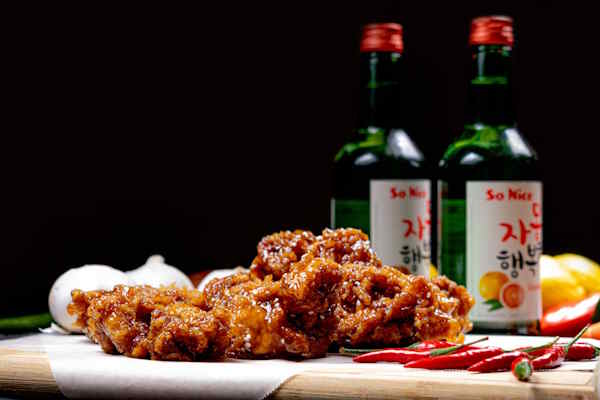
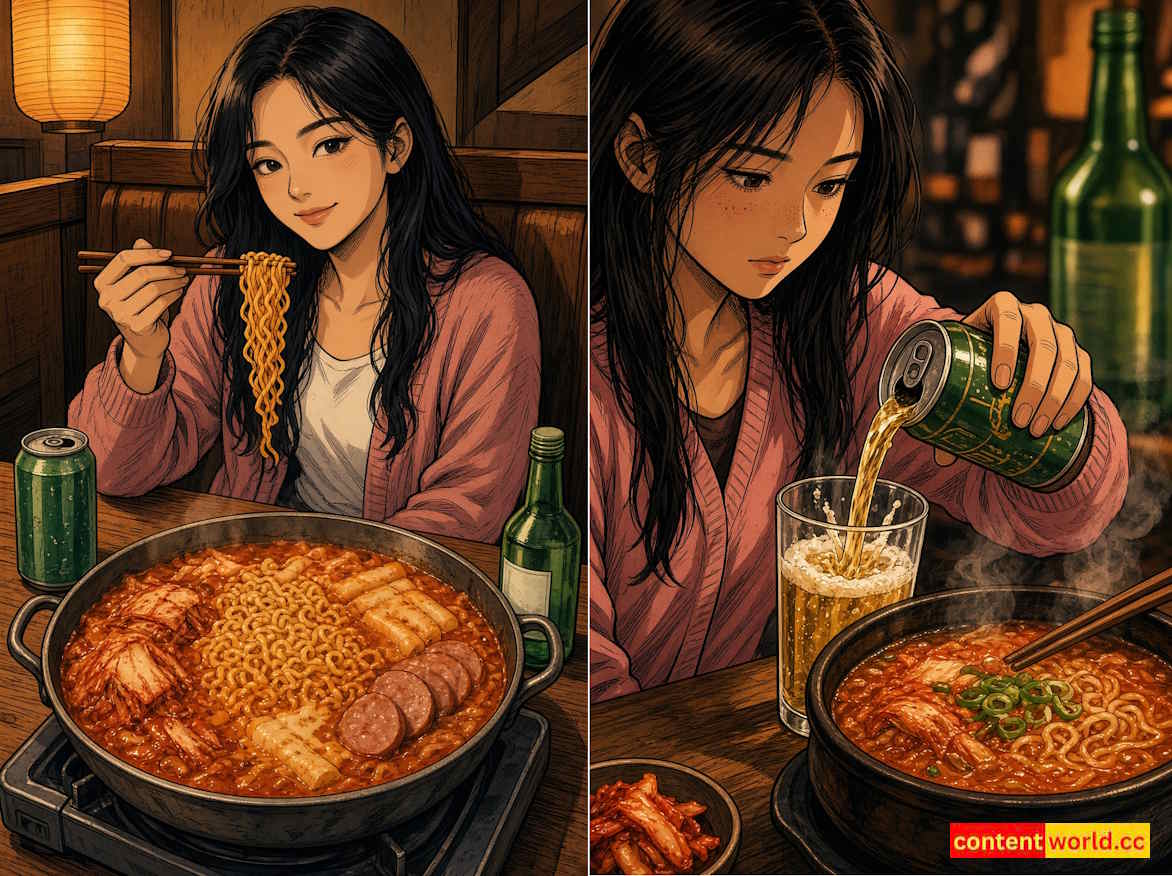
The bottle makes a crisp sound as the cap pops off. Soju pours into a small glass; nearby, meat sizzles on a personal grill. The woman in the frame is young and neatly dressed; the camera is positioned at just the right angle. She eats alone, drinks alone, and the clip sells this as an act of liberation. On TikTok, such scenes are known as “solo mukbangs.” In South Korea, they have long had their own terms: honbap (eating alone 혼밥) and honsul (drinking alone 혼술)—both derived from honja, meaning “alone.”
A casual glance at the feed suggests self-care. A closer look reveals a society that has industrialized loneliness and rebranded alcohol consumption as a leisure activity.
From Taboo to Product Category
For a long time, eating and drinking in South Korea were communal rituals. Sitting alone at a restaurant table was considered embarrassing—almost a sign of social failure. That has changed—not because an app willed it, but because household structures have shifted. According to the national statistics agency, there were approximately 8.05 million single-person households in 2024. This represents 36.1 percent of all households, making it the most common household type in the country. In 2015, that figure stood at 27.2 percent.
Trendy articles often frame this as a story about young, financially independent women in Seoul. The statistics tell a different tale. The largest age group among those living alone is over 70, not under 30. Nearly three-quarters of households receiving basic social security benefits are single-person households. The aesthetic clip and the demographic reality share a term, but not the same life. Nevertheless, the market has responded. Individual grills in Korean BBQ restaurants, single-serving portions, and bars explicitly catering to solo drinkers. Reservation data from the service CatchTable for January through July 2026 shows a 38.1 percent year-on-year increase in solo reservations and a 48.5 percent rise in solo waitlist entries. Two-thirds of these bookings were at establishments with an average bill exceeding 50,000 won. Being alone is no longer just a cheap way to unwind after a shift; it has become a distinct market segment.
What the algorithm makes of it
On TikTok, this is evolving into a genre formula. Young Korean women film their post-work evenings: hearty portions, soju or beer, and crisp audio. The sounds of opening the bottle, pouring the drink, and swallowing aren’t just background noise—they are the product itself. ASMR meets what the platform calls “Main Character Energy.” It’s about enjoying one’s own company rather than being pitied, appearing financially independent, and tucking into a hearty meal without apology.
The visual contrast is calculated: petite, fashionable, and able to hold one’s liquor. This directly defies the rigid beauty standards that these same platforms usually reinforce. That is why the clips work; they feel like a contradiction, yet—above all—they are expertly edited.
Traditional Korean drinking etiquette—where younger people pour for their elders and no one empties their glass alone—is rarely seen in these videos. *Honsul* represents the etiquette of the post-work hour, when hierarchies no longer sit at the table. Or when the table consists of just one person.
The figure that doesn’t fit in the glass
It only feels cozy as long as you ignore the health statistics. The Korea Disease Control and Prevention Agency defines binge drinking as consuming at least five drinks for women and seven for men on a single occasion. In 2024, this rate stood at 39 percent for women in their twenties—the highest figure among women. For women in their thirties, the rate rose from 33.8 percent to 42.1 percent between 2015 and 2024; this represented the sharpest increase across all age and gender groups. Conversely, the rate declined significantly among men in their twenties and thirties during the same period. While men still drink more overall, the gap is narrowing—and it is narrowing on the very side that social media feeds frame as “self-care.”
The *Korea Times* has explicitly linked this rise to the normalization of *honsul* (drinking alone). Mandatory rounds at company dinners are becoming less common; instead, drinking is shifting to the home and the solitary setting. For women juggling paid employment and caregiving duties, that glass of alcohol after 10 p.m. often represents the briefest available respite. Experts attribute this not to a lack of willpower, but to a context in which heavy consumption becomes invisible because it no longer takes place within a group.
South Korea possesses one of the most grueling work cultures among industrialized nations, alongside a drinking culture that for decades served to cement hierarchies. Solitary drinking does not dissolve this dynamic; it privatizes it. What was once peer pressure can be rebranded by algorithms as freedom.
Who is missing from the picture
The clips almost never show the woman over 70 eating alone because her social safety net has frayed. They rarely show the man—who, statistically speaking, is still more likely to binge drink. They do not show the establishments that continue to turn away solo diners, even though …
Demand is rising. Yet they don’t show what happens after the cut: the second bottle that no longer fits the format, the next morning that brings no views.
“Honsul” bars in neighborhoods like Hongdae now advertise the exact opposite of isolation. You drink alone, but you are free to strike up a casual conversation—without obligation. Sociologists interpret this not as withdrawal, but as a desire for connection without the emotional costs of a relationship. Ten minutes, then move on. This, too, is a response to pressure—just a different one from the silent soju glass held before a smartphone camera.
The Price of Freedom Here
No one needs to deprive a woman of her solitary evening at a BBQ joint to question this trend. The real question lies elsewhere: Who profits from making exhaustion look like a lifestyle? The eateries that set up single-person grills. The platform that prioritizes promoting the sound of swallowing. The viewers outside Korea who save the clip for its aesthetic appeal, unaware of the underlying reality.
Honbap and honsul were once slang terms for something people were reluctant to admit to. Today, they are a brand, a reservation category, and a video format. The bottle still makes a satisfying click when opened. That sound, however, reveals nothing about why the glass is so full.
 contentworld – stories & news & daily freshest content for you!
AI gen