The U.S. House of Representatives has overwhelmingly approved a new bipartisan bill. The measure aims to stop regular citizens from having to pay for the massive electricity costs generated by big tech companies.
Key Facts About the Vote
- Huge Majority: The bill passed with an overwhelming 417 to 3 votes.
- Fast-Tracked: Republican leaders pushed the bill through quickly, requiring a two-thirds majority.
- Next Steps: The legislation now moves to the Senate for consideration.
Why This Legislation Was Created
The global race to develop Artificial Intelligence (AI) has caused a massive boom in large-scale data centers. These facilities eat up giant amounts of power. Lawmakers are facing heavy pressure because energy bills are rising, and people worry the power grid cannot keep up. In fact, experts from the International Energy Agency estimated that data center electricity use could more than double by the end of the decade.
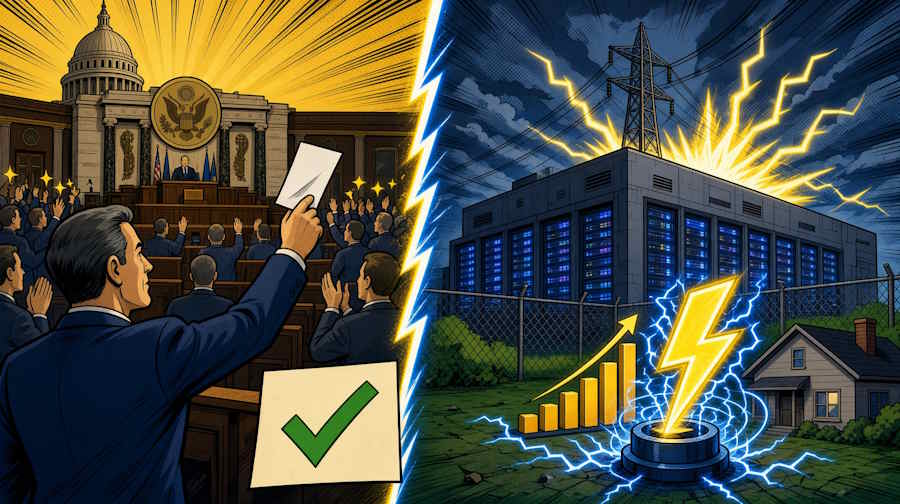
Who Will Pay for the New Infrastructure?
Republican Representative Gabe Evans of Colorado introduced the measure. The bill has gained strong support from politicians facing tough election matchups in 2026, where energy prices and AI growth are major campaign topics.
The main goal of the law is straightforward: the biggest power users must pay for their own upgrades.
- Tech companies must fund the new power infrastructure that services their data centers.
- State utility regulators are encouraged to set strict billing rules for these “large-load customers.”
- Hardworking families will be protected from seeing their monthly electricity bills spike.
House Speaker Mike Johnson stated that AI firms have a responsibility to be good neighbors. He emphasized that American families should not foot the bill to build out infrastructure for wealthy tech companies.
 sdp
sdp
Candy Shop
The term is firmly established in the urban music scene, a trend largely driven by 50 Cent’s chart-topping song of the same name from 2005. Here, the sweet façade becomes an unmistakable metaphor: the shop represents the sexual realm or one’s love life, while the “candy” serves as a euphemism for erotic practices and sexual desire.
In the world of pop culture and media, the cow is regarded as the ultimate symbol of the “cash cow.” Ye as a revenue stream: the cow represents Kanye West’s musical and financial empire.
 sdp
sdp