Trump dividend: $5,000?
What’s going on?
On September 9, 2026, in Dallas (RNC Midterm Convention), Trump announced a ” Trump Dividend “: $5,000 to every adult US citizen , but only if Republicans retain control of the House and Senate . His rationale: the economy is performing so well that, like a company, he can distribute profits; the money is to be spent in the USA. Details (financing, timing, mechanics) are lacking.
A rough cost estimate: for approximately 245 million adults, roughly over $1 trillion – on the order of the entire US defense budget. This is why many reports (Handelsblatt, dpa, The Hill) appear skeptical: politically and fiscally, it’s hardly realistic.
Is that permissible?
- As a speech/election promise: yes – politicians are allowed to promise a lot.
- As a payment from the federal treasury: the president cannot simply order such a thing unilaterally. Expenditures generally require congressional legislation and appropriation (budgetary law). During the earlier $2,000 tariff rebate , Trump had suggested he might not need Congress – NEC chief Kevin Hassett later signaled the opposite: Congress must be involved .
- The idea of ”money only if our party wins the election” is ethically and legally problematic. It smacks of vote buying/illegal election incentives . Direct payments to voters contingent on a party’s victory are not a normal stimulus program; the Guardian and other organizations are already raising ethical concerns. Whether this constitutes a criminal offense depends on the specifics of the legislation and legal precedent – one thing is clear: there’s no ready-made law, and no checks will be arriving in the mailbox .
- Historical comparison: Corona stimulus checks (2020/21) were implemented via congressional resolution , not as a party condition.
Where did the idea come from?
- Direct precursor: Trump’s earlier promise of ~$2,000 “Tariff Dividend” – citizens are to share in tariff revenues (often discussed with income limits), not yet implemented .
- Rhetoric: State as a company, citizens as shareholders (“cash distribution to shareholders”).
- Election campaign tactic for the 2026 midterms: narrow majorities, headwinds (polls, criticism of the Iran war) – a big material promise to generate mobilization.
- Examples: Alaska Permanent Fund / resource dividends, stimulus checks – but here with party affiliation and without a clear source of funding.
In short: election campaign promises with a huge price tag, the idea precursor to the customs rebate, implementation would require Congress and money – and the linkage “only if GOP wins” makes it politically explosive and legally at least questionable.
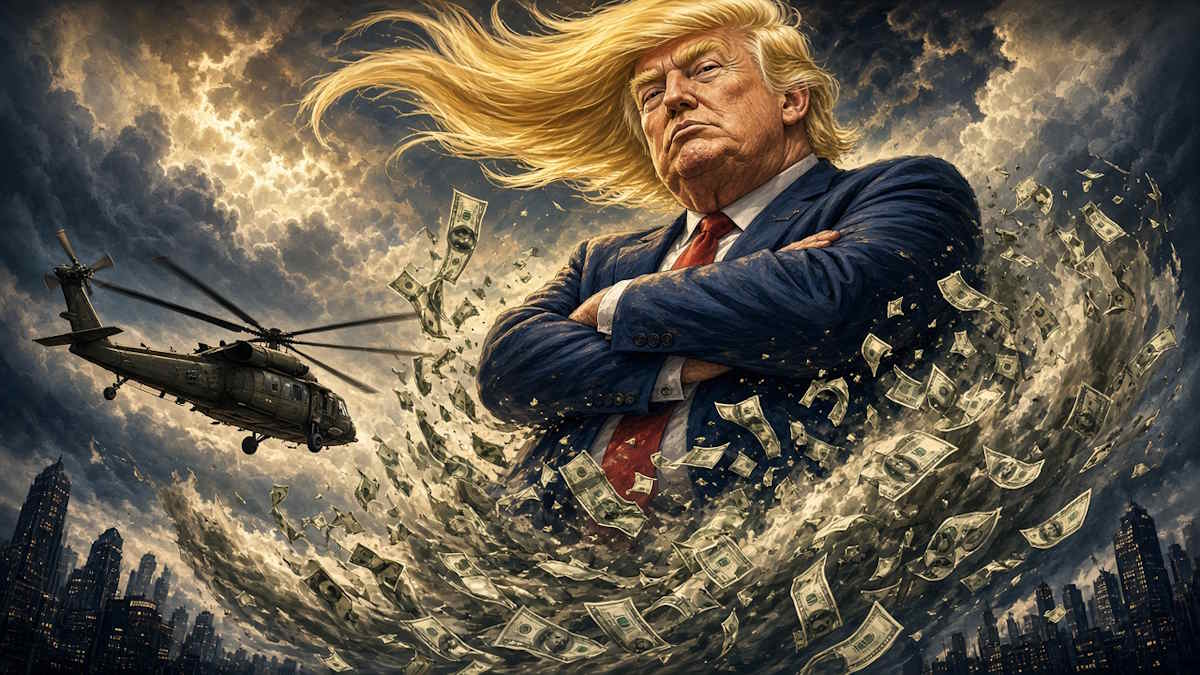
Helicopter money : The government (or the central bank) gives citizens fresh money directly – metaphorically “dropped from a helicopter” – so they can spend it and stimulate the economy. The concept originates with economist Milton Friedman (1969). Unlike loans or bond purchases (QE), the money reaches people , often as checks/transfers. Risk: It strongly affects demand and can drive inflation . The COVID-19 stimulus checks and Trump’s “dividend” are often categorized in this context.